

MPPT VS. PWM charge controller: Choosing the right option for solar system
Solar energy systems play a vital role in meeting the increasing energy demands of residential and commercial applications. Selecting the right charge controller is crucial to ensuring optimal performance and efficient use of solar modules.
This article discusses the differences between Maximum PowerPoint Tracking (MPPT) and pulse width modulation (PWM) charge controllers and helps the reader to make an informed decision.
Part 1: Why do you need charge controllers?
To fully understand the importance of charge controllers, it is essential to grasp their fundamental necessity in solar power systems.
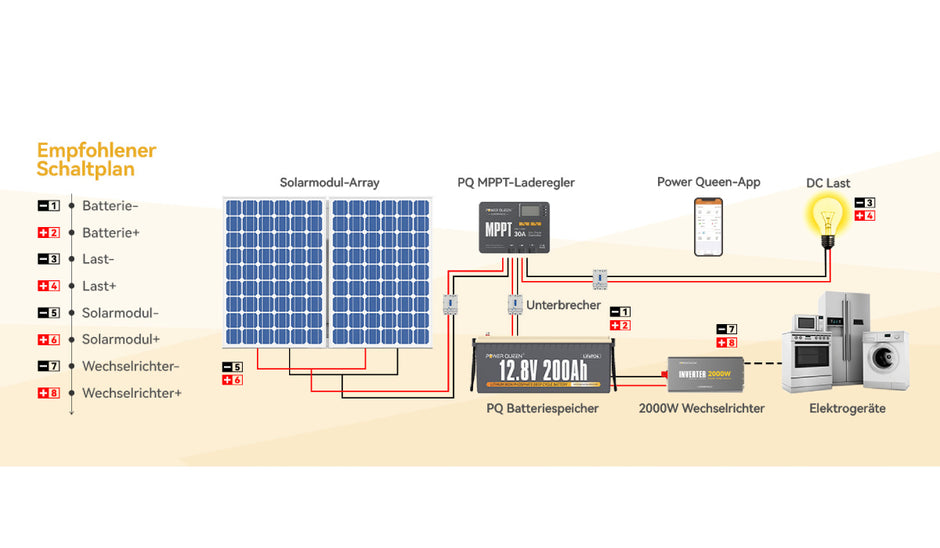
These systems, consisting of solar panels and batteries, face the challenge of an irregular and fluctuating supply of solar energy. The task of charge controllers is to regulate and optimize the energy flow between the solar panels and the batteries to ensure that the batteries receive the correct charge and that overcharging or undercharging is prevented.
This sophisticated control mechanism not only ensures the longevity and performance of the batteries, but also increases the overall efficiency of the system.
The function of the charge controller
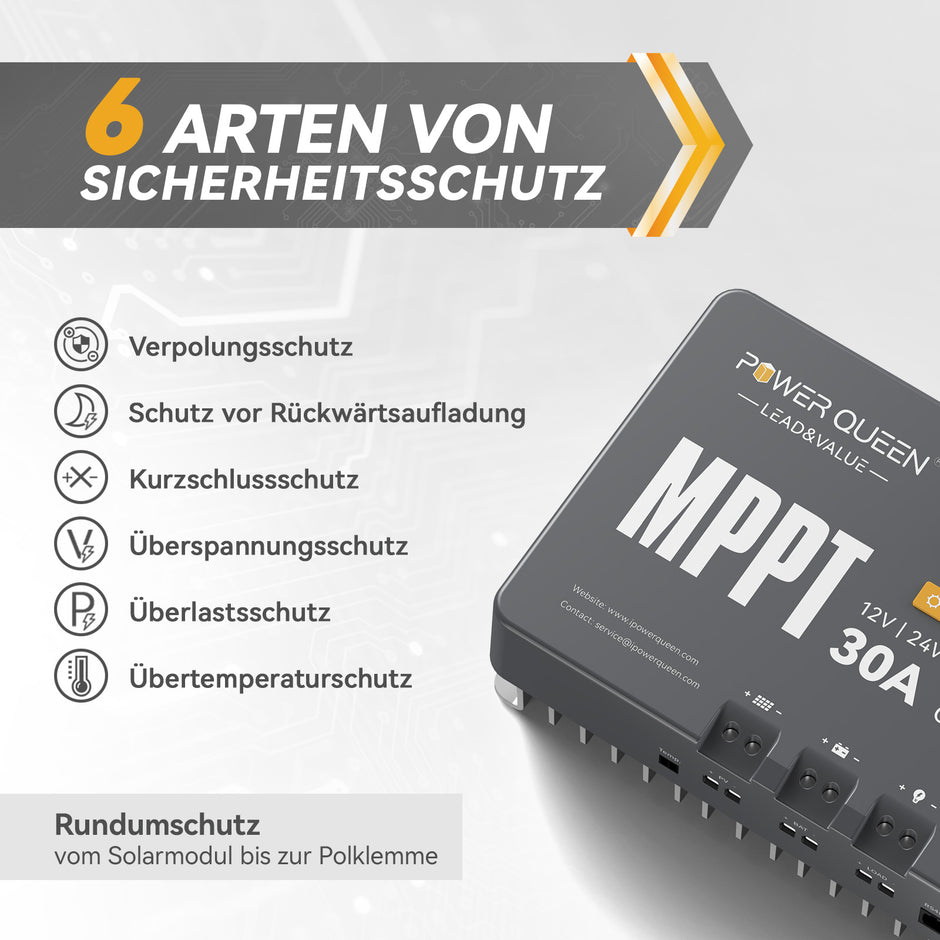
- Protection against reverse shifting:Charge controllers typically have a reverse polarity protection feature. This means that if the battery is connected incorrectly to the charge controller, it prevents any current flow, thus protecting both the battery and the charge controller from potential damage.
- Protection against reverse charge:This function prevents the battery from discharging back into the solar panel array when sunlight is low or absent. This ensures that the energy generated by the solar panels is used efficiently to charge the battery and is not wasted.
- Short-circuit protection:The short-circuit protection is designed to prevent damage to the charge controller and other components in the system in the event of a short circuit. It quickly detects excessive current flow and shuts off the circuit to prevent potential damage or hazards.
- Surge protection:The overvoltage protection prevents excessive voltage from damaging the batteries or other system components. It monitors voltage levels, and if they exceed a preset limit, the charge controller regulates or interrupts the charging current to protect the battery and the system.
- Overload protection:The overload protection safeguards the charge controller and the system from excessive current generation. It is particularly useful when the power output of the solar panels suddenly increases, for example, due to the removal of shading. The charge controller can limit the input power to a level that the system can handle.
Overall, these protective functions in a charge controller contribute to increasing the safety and reliability of the solar system. They play a crucial role in preventing potential damage to the batteries, the charge controller, and other components, ensuring the system's longevity and efficient operation.
Part 2: Research on MPPT charge controllers
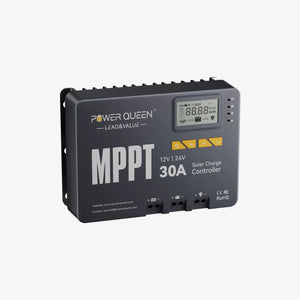
MPPT (Maximum Power Point Tracking) charge controllers are electronic devices used in photovoltaic solar systems to optimize the energy yield of solar modules. They continuously track the maximum power point (MPP) of the solar array and adjust the voltage and current to ensure maximum energy production.
Advantages of MPPT charge controllers
MPPT charge controllers are more efficient than PWM (pulse-width modulation) charge controllers because they convert the excess voltage from the solar panels into additional current, thus enabling higher output power. By using DC-DC converters, they are able to convert higher voltages, which allows for compatibility with higher-voltage arrays and reduces power loss during the conversion process.
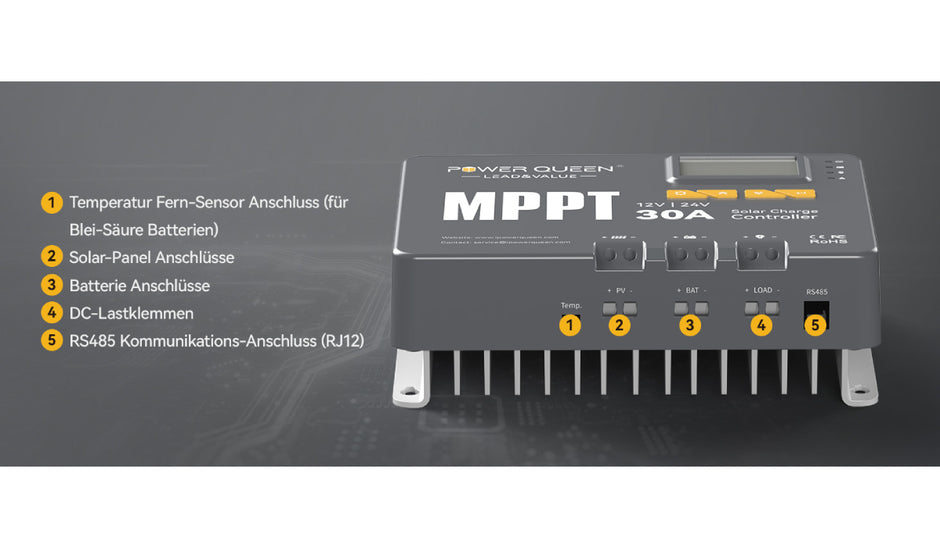
One of the main advantages of MPPT controllers is their ability to to generate more electricity in poor lighting conditionsThey constantly adjust the operating point of the solar modules to the changing environmental conditions, thus ensuring better performance during cloudy or shady periods.
Another advantage of MPPT charge controllers is that they Flexibility in the dimensioning of the system With PWM controllers, the solar array voltage must match the battery voltage, which can be limiting during system design. MPPT controllers, on the other hand, can accept a higher input voltage from the solar modules, allowing for greater flexibility in system sizing and configuration.
MPPT charge controllers also offer improved scalability of the systemIf you plan to expand your solar power system in the future, MPPT charge controllers can handle higher voltages in the system and easily manage the increased power.
In summary, MPPT charge controllers offer higher efficiency, better low-light performance, compatibility with higher-voltage arrays, flexibility in array sizing, and better system scalability compared to PWM controllers. However, when deciding between MPPT and PWM controllers, factors such as budget, system size, and specific application requirements should be considered. PWM controllers can still be a viable option for smaller systems or those with limited budgets.
Part 3: Exploring PWM Charge Controllers
PWM (pulse-width modulation) charge controllers are a type of charge controller used in solar systems. They regulate battery charging by rapidly switching the output voltage of the solar panel on and off. This generates a square wave with varying pulse width, which allows the charge controller to gradually reduce the voltage applied to the battery as it reaches its full charge.
PWM charge controllers have been used in small to medium-sized solar power systems for many years. Compared to MPPT (Maximum Power Point Tracking) controllers, they are simpler and less expensive, making them a more affordable option for certain applications.
However, PWM controllers are less efficient compared to MPPT controllers. They do not convert excess voltage into additional current, meaning that some of the energy from the solar panels remains unused. Furthermore, PWM controllers can struggle to utilize the current efficiently in low light or cloudy conditions.
Overall, PWM charge controllers are best suited for smaller solar systems with lower voltages where cost is a major factor and efficiency is not the highest priority.
Part 4: How do I choose a PWM or MPPT charge controller?
Several key factors should be considered when deciding between PWM and MPPT charge controllers:
- Budget:If you have a limited budget or are working with a smaller solar system, a PWM charge controller could be the more cost-effective option. They are generally less expensive compared to MPPT controllers.
- System size:The size of your solar system and its voltage play a crucial role in determining the most suitable charge controller. PWM controllers are ideal for smaller systems with lower voltages, while MPPT controllers are suitable for higher voltages and offer better scalability.
- Efficiency:If maximizing the efficiency and power output of your solar panels is your top priority, then an MPPT charge controller is the right choice. MPPT controllers are more efficient because they can convert excess voltage into additional current, resulting in higher power output.
- Environmental conditions:Consider the typical weather patterns and environmental conditions at your location. If you frequently experience poor lighting conditions or cloud cover, MPPT controllers are better suited to these situations and offer optimal performance.
- Advanced Features:MPPT charge controllers often offer advanced features and precise control over charging parameters, such as programmable settings and data monitoring. If these features are important to you, an MPPT controller may be the better choice.

FAQs about the charge controller
1. Can I mix different types of charge controllers in one system?
It is generally not recommended to use different types of charge controllers in one system. Each type has its own operating characteristics, and using different controllers together can lead to inefficiencies or compatibility problems.
2. How do I choose a charge controller for my system?
The size of the charge controller should be based on factors such as the maximum voltage and current of the solar panel array, as well as the size of the battery bank. It is recommended to consult the manufacturer's specifications or seek advice from a solar specialist to determine the appropriate size.
3. What types of charge controllers are there?
The two main types of charge controllers are MPPT (Maximum Power Point Tracking) and PWM (Pulse Width Modulation). MPPT controllers are more efficient and offer advanced features, while PWM controllers are simpler and less expensive.
Conclusion
In summary, MPPT charge controllers offer higher efficiency, better low-light performance, compatibility with higher-voltage arrays, flexibility in array sizing, and better system scalability compared to PWM controllers. However, PWM controllers are simpler and less expensive, making them a suitable option for smaller systems or those with a limited budget.
Remember to consult the manufacturer's instructions and seek professional help if you are unsure about installing or using a charge controller in your solar system.
As a provider of one-stop solar system solutions, we offer Power Queen not only LiFePO4 batteries, but also LiFePO4 chargers, portable solar panels, solar charge controllers and much more.
If you have any questions, please contact service.de@ipowerqueen.comWe are always there for you.