



AGM VS. LITHIUM BATTERIES: WHICH IS BETTER SUITABLE FOR MOTORHOMES AND SHIPPING?
In today's world, where portable power supplies are essential for a wide variety of applications, selecting the right battery technology is crucial for achieving optimal performance, longevity, and cost-efficiency. AGM (Absorbent Glass Mat) batteries and lithium batteries are two popular battery types that are often compared due to their unique properties and applications. To make an informed decision, it is important to understand the differences between these battery types.
What is an AGM battery?
AGM, or Absorbent Glass Mat, refers to an advanced type of lead-acid battery. Unlike conventional lead-acid batteries, in AGM batteries the electrolyte (sulfuric acid) is embedded in a fiberglass mat, making them leak-proof and maintenance-free.
AGM batteries are preferred in applications requiring reliable, maintenance-free energy storage, e.g., in backup power systems, renewable energy storage, in the Marine and recreational vehicle applications as well as certain Automotive applications. AGM batteries are known for their ability to deliver high currents when needed and are ideal for scenarios where a reliable power source is crucial.
What is a lithium battery?
A lithium battery is a rechargeable energy source that uses lithium as its active material and is therefore preferred in numerous applications. Lithium batteries are renowned for their high energy density, low self-discharge rates, and long lifespan, and can be recharged hundreds to thousands of times. They encompass various chemical compositions, including lithium-ion (Li-ion), lithium polymer (LiPo), and lithium iron phosphate (LiFePO4), each with different properties.
Lithium-ion batteries are widely used in They are used in consumer electronics such as smartphones, laptops, and tablets, as well as in electric vehicles, power tools, and energy storage systems. Their lightweight design and high energy density make them ideal for portable electronic devices and electric vehicles.
Lithium batteries are valued for their ability to deliver a lot of power and their high energy density, making them the preferred choice for many modern applications. However, proper handling and charging are crucial to ensure safety and maximize their lifespan.
The comprehensive comparison of AGM VS Lithium battery
To understand the performance differences between AGM and lithium batteries, We will evaluate them based on the most important parameters. This comparison will highlight which battery performs best in each category, allowing you to make a well-informed decision that meets your specific needs.
discharge depth (DoD):
AGM: Typically offers a depth of discharge of around 50%. Exceeding this limit can damage the battery and shorten its lifespan.
Lithium: Supports much deeper discharges, often over 80% and up to 100%, without causing damage. Consequently, a lithium battery with the same capacity can deliver up to twice the usable energy compared to an AGM battery.
Life:
AGM: AGM batteries typically have a lifespan of about 300 to 500 cycles, which corresponds to a usage period of about 3 to 5 years.
Lithium: Lithium batteries generally have a much longer lifespan, with a cycle count of 4,000 to 15,000.For example, Power Queen lithium batteries can last between 10 and 15 years.
Size and weight:
AGM: AGM batteries are usually quite heavy; a 12V 100Ah The model typically weighs between 63 and 70 pounds.
Lithium: Lithium batteries are significantly lighter and more compact. Power Queen 12V 100Ah Group 24 Lithium Battery For example, it weighs only 21.83 pounds.

Energy density:
AGM: A Group 24 AGM battery typically has an energy density of about 7.23 Wh/lb.
Lithium: In comparison, a Group 24 lithium battery offers a much higher energy density, approximately 60.95 Wh/lb.
Charging time and efficiency:
AGM: AGM batteries typically have longer charging times and lower charging efficiency compared to lithium batteries. It usually takes about 8 hours to fully charge an AGM battery.
Lithium: Lithium batteries charge faster and with greater efficiency than AGM batteries. Most lithium batteries can be charged at 0.2C; for example, a 12V 100Ah lithium battery It can be fully charged in 5-6 hours with a recommended charging current of 20A.
Maintenance:
AGM: AGM batteries generally require minimal maintenance, but can benefit from occasional equalization charges. It is advisable to fully charge them when not in use.
Lithium: Lithium batteries require minimal maintenance and no regular equalization charging.
Environmentally friendly:
Both AGM and lithium batteries are recyclable and offer environmentally friendly options. However, lithium batteries have a slight advantage due to their higher energy density and longer lifespan, meaning fewer batteries need to be recycled over time.
Security:
AGM: AGM batteries are generally safe, but can release hydrogen gas if overcharged or improperly maintained.
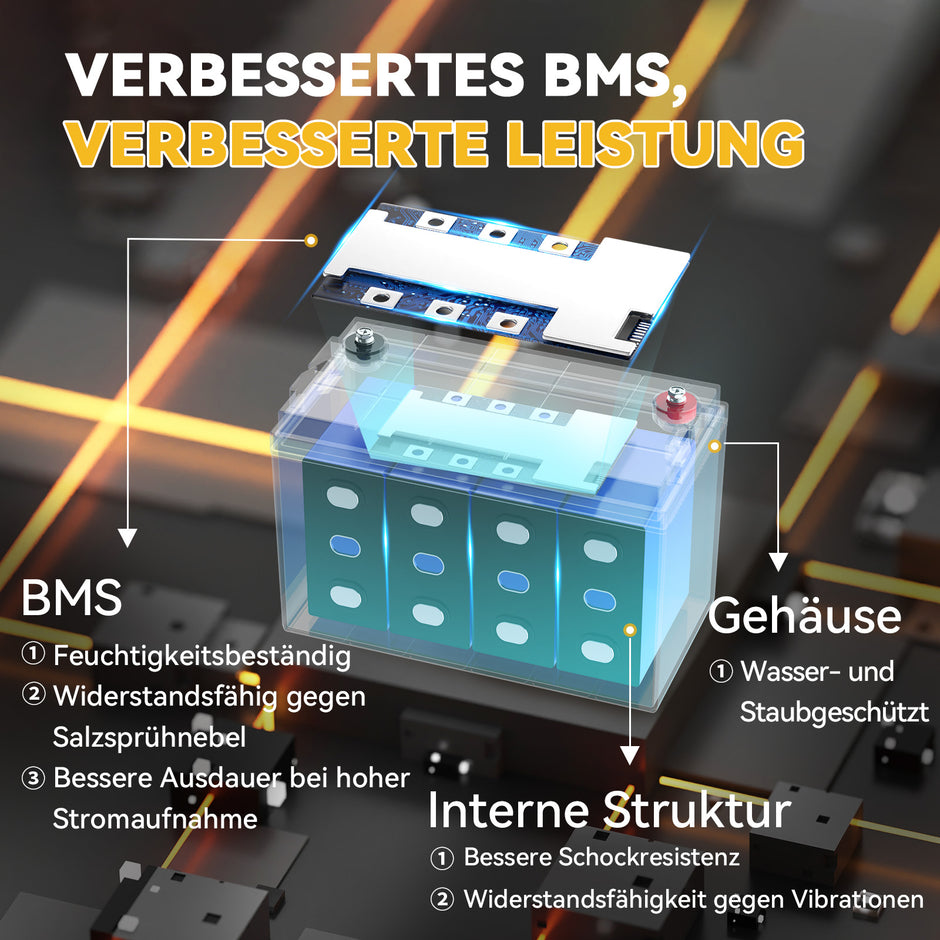
Lithium: Lithium-ion batteries do not produce gas and contain no toxic liquids, so they can be used without additional safety precautions. Furthermore, lithium batteries are equipped with a Battery Management System (BMS) equipped to offer additional protection.
Bluetooth technology
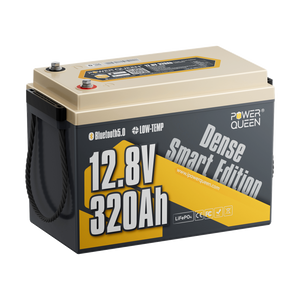
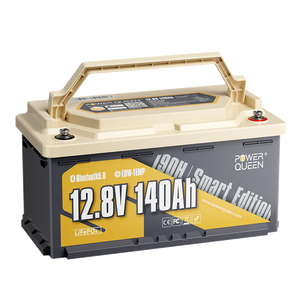
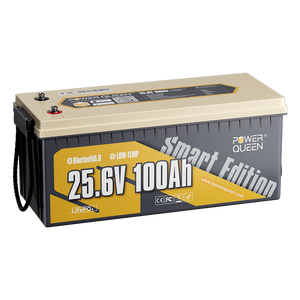
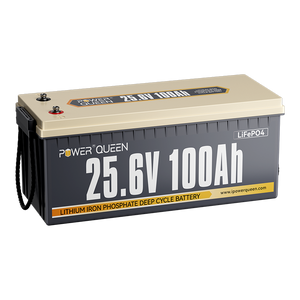
Lithium batteries offer a significant technological advantage over AGM batteries. For example, the Power Queen Groupe 24 Smart and Power Queen 24V 100Ah Smart Solar Battery Equipped with Bluetooth technology. This feature allows for convenient monitoring of the battery status at any time and ensures smooth operation before embarking on boat trips, RV adventures, or UTV excursions.
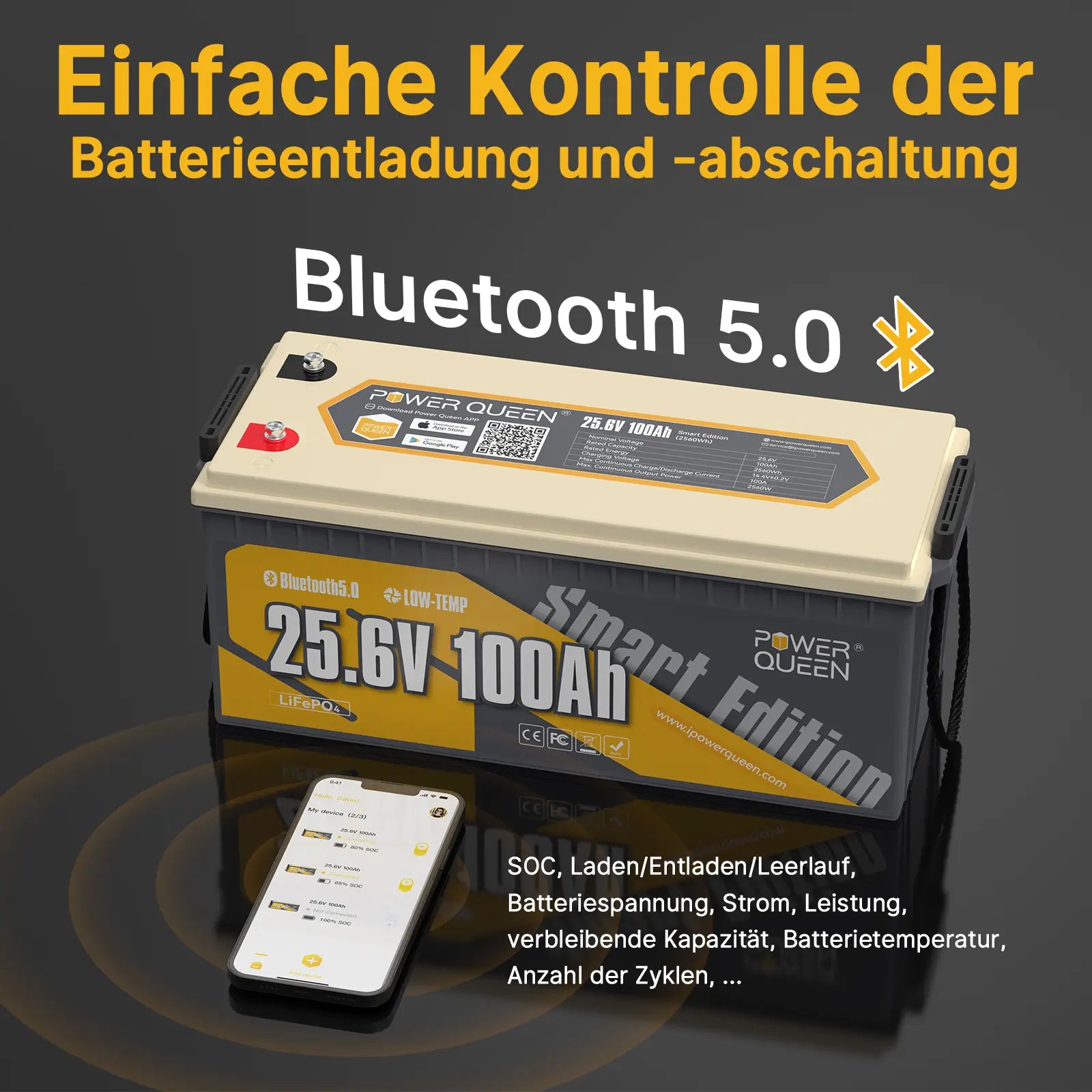
The Bluetooth connection allows users to easily check important details such as remaining charge level, voltage, and temperature. The Power Queen app on your smartphone provides effortless access to all battery data with just a few taps, eliminating guesswork and uncertainty and allowing for calm and efficient energy management.
Initial costs
Cost plays a crucial role in the choice between two battery types, with two factors being important: the initial cost and the cost per kWh.
Lithium-ion batteries require a higher initial investment.Despite their superior performance in various aspects compared to AGM batteries, the initial costs are significantly higher.
AGM batteries prove to be the more economical option in terms of initial investment. However, when assessing lifetime costs, lithium-ion batteries demonstrate their superiority due to their significantly longer lifespan.
| aspect | AGM battery | Lithium battery |
| discharge depth | Normally about 50% | Over 80%, up to 100% without damage |
| life | 300-500 cycles, 3-5 years | 4000-15000 cycles, 10-15 years |
| size and weight | Heavier, 12 V, 100 Ah: 63–70 pounds | Lighter, 12V, 100Ah: 21 pounds |
| Energy density | 7.23 Wh/pound | 6 times more powerful than comparable lead-acid batteries |
| Charging time | Longer loading times | Shorter loading times |
| Charging efficiency | Lower charging efficiency | Higher charging efficiency |
| maintenance | Minimal maintenance, occasional equalization charge | Minimal maintenance, no regular equalization charging |
| Environment | Recyclable, but less environmentally friendly due to its energy density and shorter lifespan. | Recyclable, more environmentally friendly due to energy density and longer lifespan |
| Security | Generally safe, but hydrogen gas may be released if overloaded. | Safer, no gas release, equipped with a BMS for protection |
| Bluetooth | No | Yes |
| Initial costs | Lower | Higher |
Comparison of AGM and lithium battery applications
After evaluating the performance of AGM and lithium batteries with respect to various parameters, it is crucial to assess their suitability for specific applications.
Not all batteries are universally suitable, and certain models may excel in specific scenarios. Let's look at the specific applications for which AGM and lithium batteries are ideally suited:
Leisure batteries
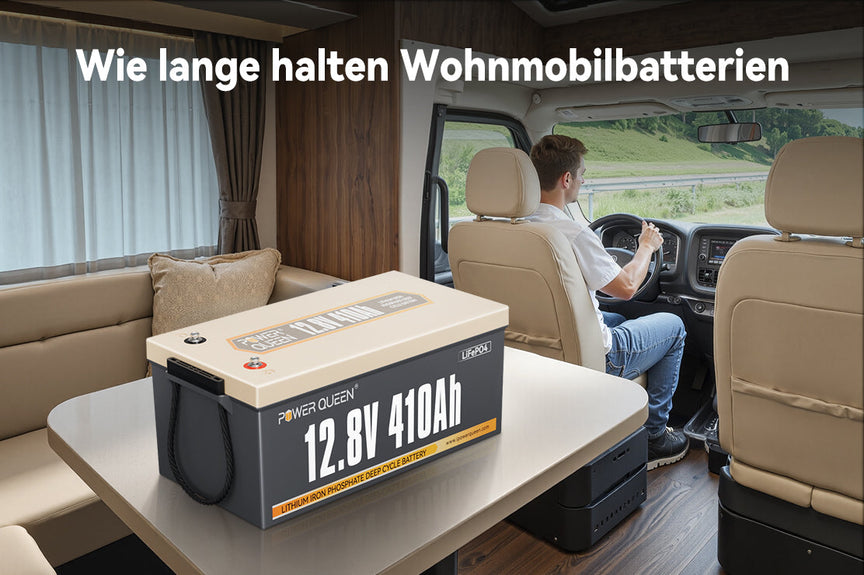
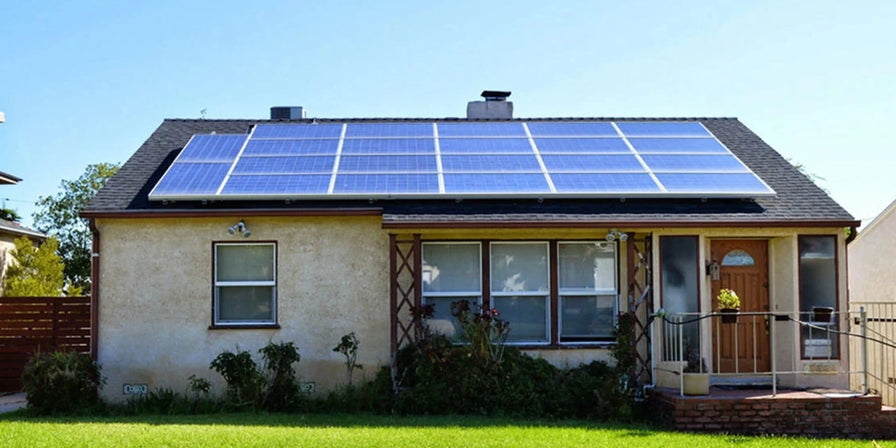
LFP batteries are highly recommended when selecting leisure batteries for motorhomes or caravans. In the recreational battery market, consumers value factors such as long lifespan, safety, and minimal maintenance. Lithium recreational batteries, especially those using lithium iron phosphate (LFP) technology, excel in meeting these criteria. For recreational vehicles with integrated lithium batteries, dedicated battery chargers are preferable to the built-in chargers to ensure optimal performance.
Ship batteries
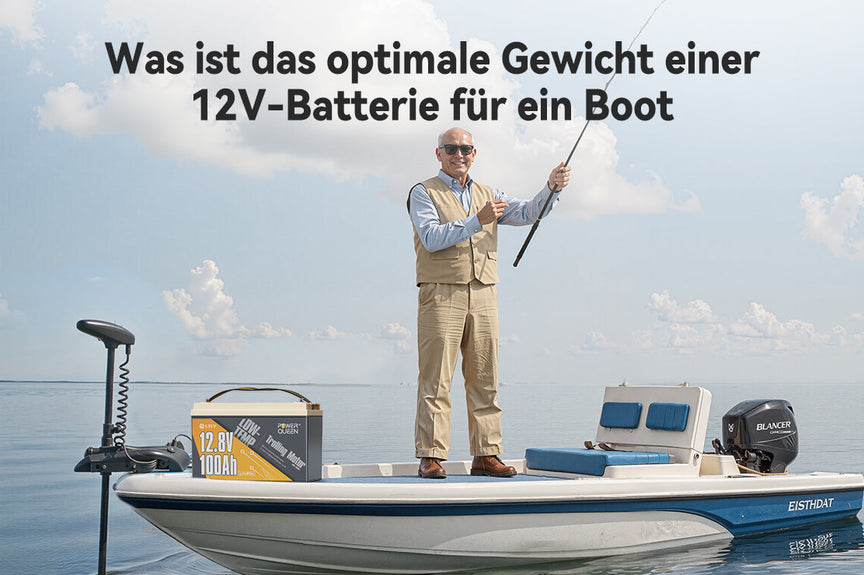
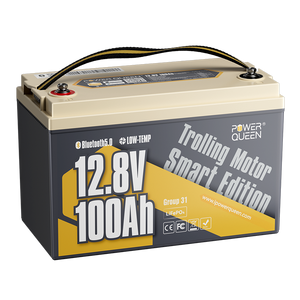
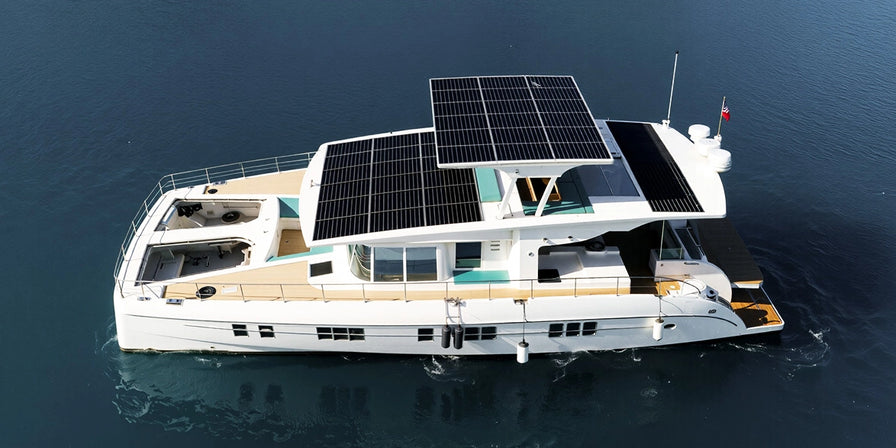
Conventional liquid or gel batteries are not well suited for use at sea because they are susceptible to movement, which can impair their performance. In contrast, most lithium batteries are solid-state and contain no liquids, making them highly compatible with marine environments. Furthermore, advanced lithium batteries for marine applications, such as the Power Queen Trolling Motor Battery Series, Equipped with improved battery management systems (BMS) specifically designed for marine applications, these systems increase reliability by being resistant to moisture, dust, water, and salt spray, thus ensuring robustness under humid and demanding conditions.

Freezing conditions
Using batteries in freezing conditions presents challenges, particularly with charging, which can be problematic at low temperatures. AGM batteries are superior to lithium batteries in this respect.
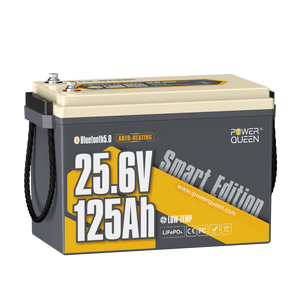
Nevertheless, modern lithium batteries such as the LFP batteries from Power Queen Lithium have a Self-heating function. Thanks to this property, they function similarly to AGM batteries even at sub-zero temperatures.
Solar energy storage
Lithium iron phosphate batteries are well suited for storing solar energy due to their high energy density, deep discharge capability, and extended warranty. While the initial cost of a single AGM battery may be lower, a single lithium battery can achieve the performance of 16 AGM batteries over its lifetime. Therefore, LFP batteries prove to be the better choice for solar storage applications.
UPS battery
Similar to the market for RV batteries, the market for UPS (Uninterruptible Power Supply) is also trending LFP batteries (lithium iron phosphate batteries) are characterized by increased safety, require minimal maintenance, and offer a higher capacity compared to equivalent AGM batteries, making them a more economical choice for the owner in the long run.
The final decision
When evaluating lithium and AGM batteries, both have different advantages and disadvantages. However, if a reliable, efficient, lightweight, and maintenance-free solution is paramount, the optimal choice becomes clear. Lithium batteries are the best option for your application. Their improved performance, longer lifespan, and integrated Bluetooth technology offer significant ease of use and convenience. Furthermore, they can save you valuable time and money.