



Complete Guide to Choosing a Lithium Battery for Trolling Motors - Why and How
Trolling motors play a vital role in fishing. They help maneuver the boat quietly and avoid spooking fish, ultimately increasing your chances of a catch. Furthermore, the type of battery you use for your trolling motor can significantly impact the performance of your fishing experience. In recent years, Lithium batteries Due to their longer lifespan and lower maintenance requirements compared to conventional batteries, lithium batteries have become a popular choice among anglers. In this article, we will discuss the advantages of using lithium batteries for trolling motors.
Table of contents
- 5 advantages of lithium batteries for trolling motors
- Advantage 1: Lightweight and portable
- Advantage 2: Longevity - LiFePO4 offers long-term cost savings
- Advantage 3: High energy density - Improved performance of the trolling motor
- Advantage 4: Low maintenance – practical for all fishing enthusiasts
- Advantage 5: Increased safety and environmental friendliness
- Factors to consider when choosing the right LiFePO4 battery size for your trolling motor
- Choosing the right LiFePO4 battery for your trolling motor
5 advantages of lithium batteries for trolling motors
Advantage 1: Lightweight and portable
When choosing the perfect trolling motor battery, weight is a crucial factor to consider. A heavy battery can negatively impact your boat's speed, maneuverability, and fuel efficiency, especially in turbulent water. Since trolling motors operate at low speeds for extended periods, opting for a lightweight battery can reduce the boat's overall weight, improving its handling and responsiveness.
The battery's weight also affects the boat's balance, which is crucial for safe operation in various water conditions. A heavy battery can cause the bow to dip, making steering difficult and unsafe in rough weather. A lighter battery can ensure the boat's stability and facilitate navigation in challenging conditions.
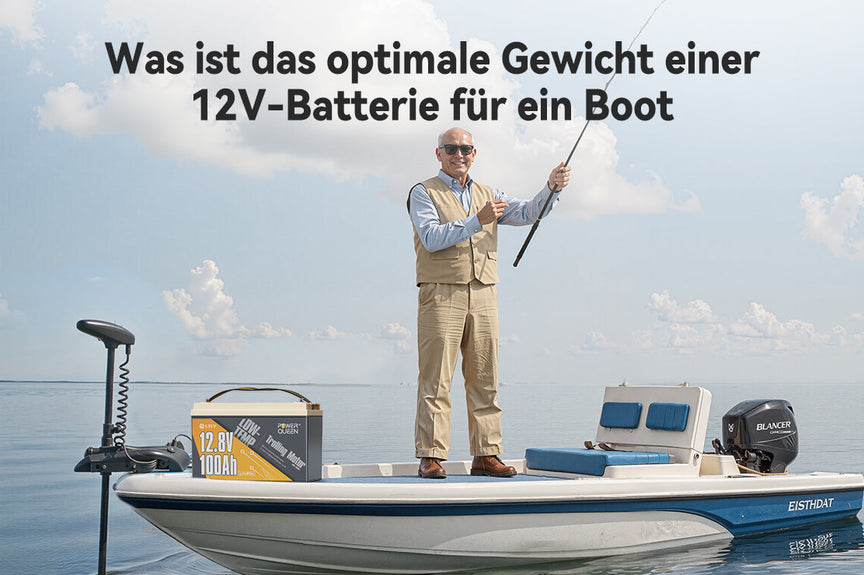
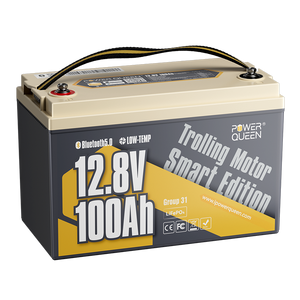
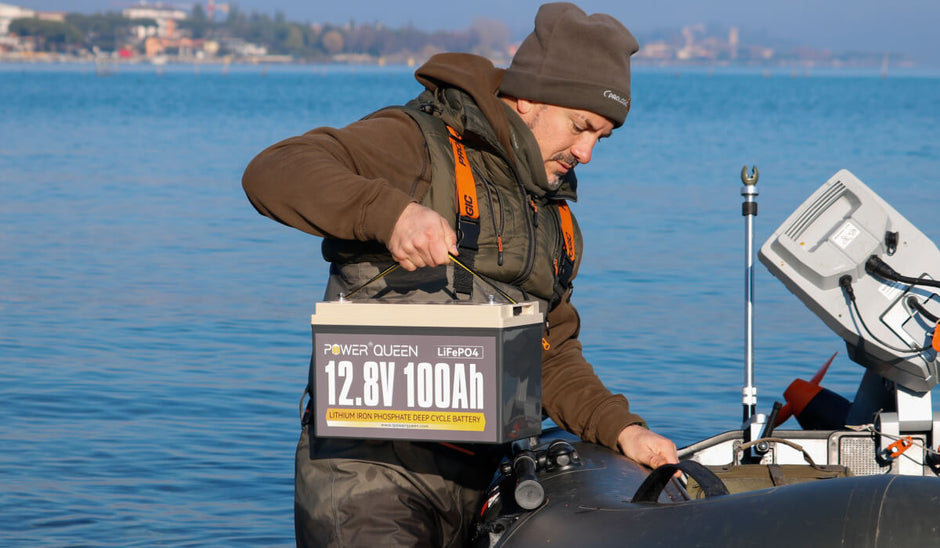
Lithium iron phosphate (LiFePO4) batteries offer a significant weight advantage over conventional gel and AGM batteries. Gel and AGM batteries often weigh between 60 and 70 pounds for a 12V 100Ah battery, while the same capacity LiFePO4 battery weighs 26 to 32 pounds. Power Queen 12.8V 100Ah LiFePO4 battery weighs only 24.25 lbs (11 kg).
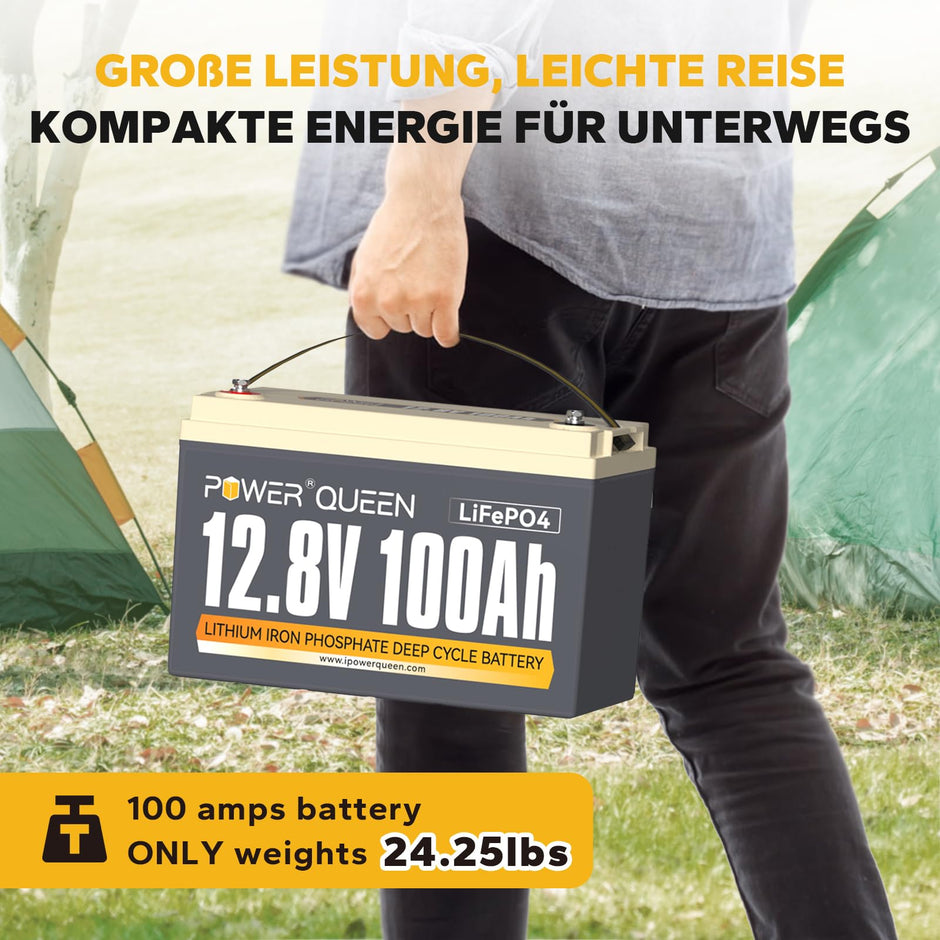
The weight savings can improve the speed, maneuverability and fuel efficiency of the boat, giving you more time to fish and less to worry about the weight of the battery.
Advantage 2: Longevity - LiFePO4 offers long-term cost savings
Trolling motors place high demands on batteries, especially during extended use in varying water conditions and at different speeds. A battery's limited lifespan can lead to premature failure, leaving you stranded on the water without power.
In contrast, a high-performance battery can maintain its capacity even with repeated use, providing you with reliable power at all times.This longevity guarantees that you will save money in the long run, as the batteries need to be replaced less often, which can be expensive and annoying.
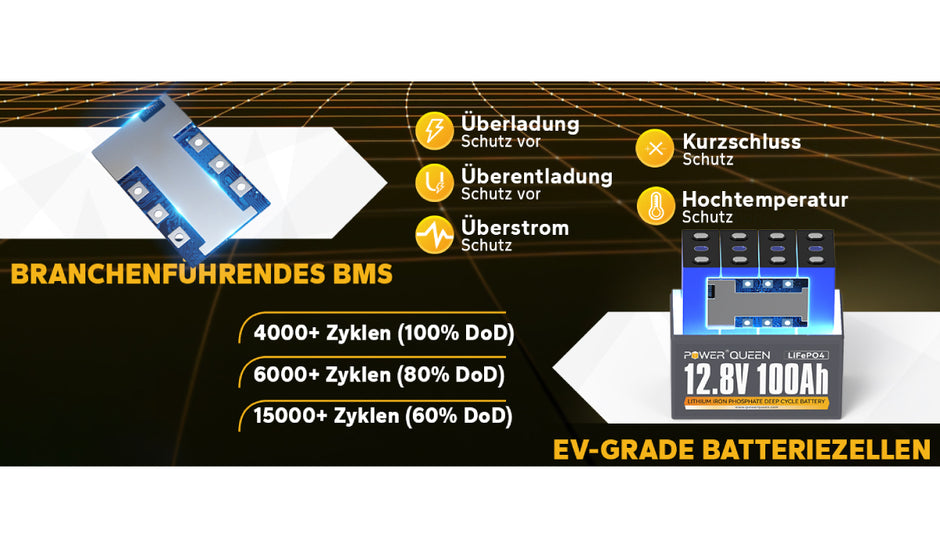
It's also important to consider a battery's expected lifespan. Long-life batteries generally last longer than their shorter-life counterparts. For example, lithium iron phosphate (LiFePO4) batteries have a lifespan 3-5 times longer than lead-acid batteries. Lead-acid batteries have a lifespan of 300-500 cycles, meaning they need to be replaced every 2-3 years. In contrast, you can use LiFePO4 batteries for more than ten years, with a lifespan of 4,000-15,000 cycles.
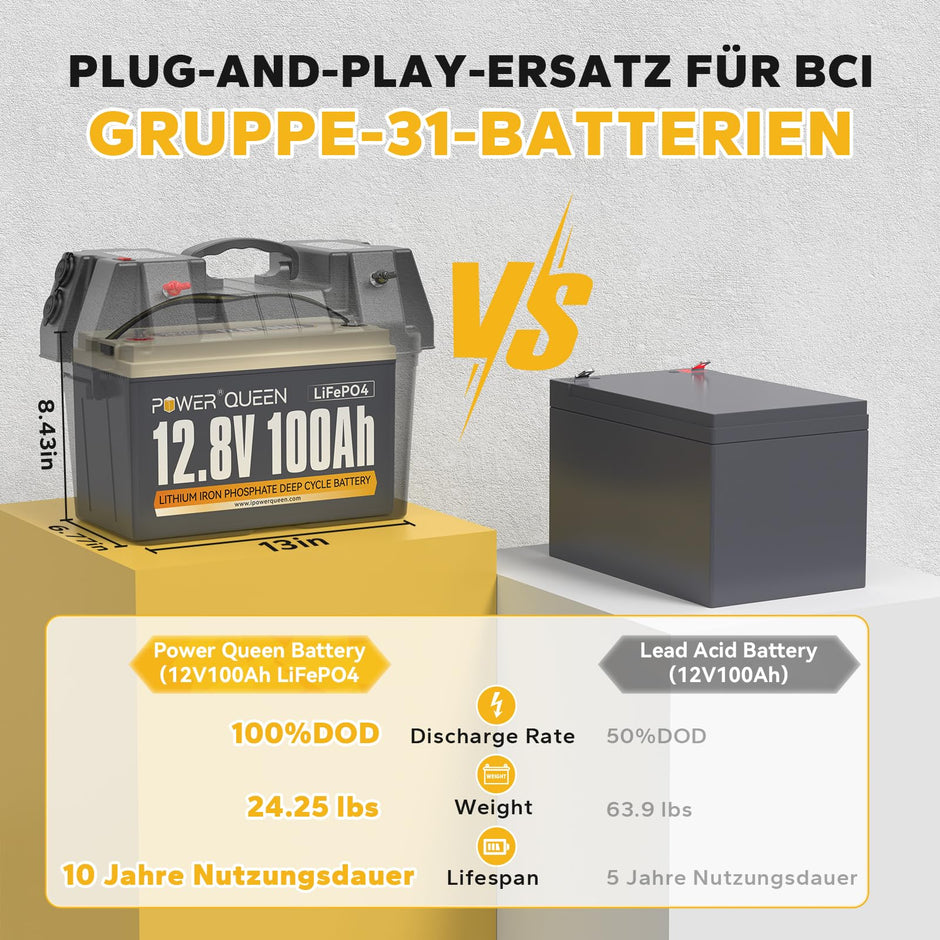
Choosing a long-life battery can help you avoid frequent battery replacement costs and hassle, ensuring your trolling motor performs optimally on the water and saving you money in the long run.
Advantage 3: High energy density - Improved performance of the trolling motor
Compared to other battery types, lithium iron phosphate (LiFePO4) batteries have a higher energy density. This means that, compared to lead-acid batteries, they can store more energy in a smaller and lighter size. While the typical energy density of lead-acid batteries is between 30 and 50 Wh/kg, it is around 100 to 150 Wh/kg for LiFePO4 batteries. Thanks to this higher energy density, LiFePO4 batteries can power the trolling motor with more energy for longer periods.
The higher energy density of LiFePO4 batteries also ensures a consistent voltage output, which is crucial for optimal trolling motor performance. This consistency allows the motor to operate at a constant speed, enabling smooth and efficient navigation on the water.
Furthermore, LiFePO4 batteries can be discharged at a higher rate than lead-acid batteries. They offer discharge rates of up to 5C or more, compared to the 1C-2C rates of lead-acid batteries. This higher discharge rate means the battery can deliver more power to the motor when needed, resulting in better performance and longer operating times on the water.
Advantage 4: Low maintenance – practical for all fishing enthusiasts
Proper maintenance is crucial for optimal performance and lifespan of the trolling motor battery, and accessibility for maintenance should be taken into account when selecting a battery.
Maintenance can impact your entire fishing experience, as regular maintenance tasks such as checking the water level, refilling with distilled water, and ensuring proper charging can be time-consuming and inconvenient, reducing your fishing time.
Lead-acid batteries, for example, require regular maintenance, and neglecting these tasks can lead to a shortened battery life or even battery failure, leaving you without power for your trolling motor.
In contrast, LiFePO4 batteries require far less maintenance than lead-acid batteries, earning them the title of "maintenance-free." LiFePO4 batteries don't need frequent water level checks and require no special charging procedures to ensure their longevity. Choosing LiFePO4 batteries saves you time and effort on maintenance, making fishing on the water smoother and more enjoyable.
Therefore, when selecting a trolling motor battery, battery maintenance is an important consideration, and choosing a low-maintenance option such as LiFePO4 can bring advantages in terms of time, effort, and overall performance on the water.
Advantage 5: Increased safety and environmental friendliness
The safety of trolling motor batteries is of paramount importance, as overcharging and undercharging pose a significant safety risk. Overcharging can lead to overheating and consequently to rupture or explosion of the battery, while undercharging can damage the battery and impair its performance.
Another risk is the release of toxic gases when charging or using the battery. Lead-acid batteries release hydrogen gas when charging or using them; this is highly flammable and can cause fires or explosions if not properly ventilated. In contrast, LiFePO4 batteries do not release toxic gases, making them safer for enclosed spaces such as boats.
Advanced safety features that ensure optimal battery safety include overcharge protection, thermal regulation, and short-circuit protection mechanisms. It is also important to store and use the battery in a well-ventilated area, away from heat sources and flames.
Power Queen's LiFePO4 batteries feature a built-in BMS (Battery Management System) that provides protection against overcharging, over-discharging, overcurrent, short circuits and high temperatures, thus ensuring the best safety and reliability.
By selecting a battery with advanced safety features and the Compliance with the relevant storage and usage guidelines You can minimize the risks associated with battery use. This way, you can enjoy a safe and worry-free experience on the water with your trolling motor. Furthermore, LiFePO4 batteries are environmentally friendly, preventing pollution and protecting the environment.
Factors to consider when choosing the right LiFePO4 battery size for your trolling motor
Lithium iron phosphate (LiFePO4) batteries offer several advantages over traditional lead-acid batteries, including high energy density, longer lifespan, and improved safety. When considering a LiFePO4 battery for your trolling motor, choosing the correct size is crucial for optimal performance and durability.
Here are some factors to consider when choosing the right LiFePO4 battery size for your trolling motor:
- Tension
The first thing to consider is the voltage required by your trolling motor. Most trolling motors operate on either a 12-volt or 24-volt system. Choose a LiFePO4 battery with a voltage that matches the requirements of your trolling motor.
- Ampere-hour (Ah) capacity
The battery's amp-hour capacity determines how long your trolling motor can run on a single charge. To calculate the required battery capacity, consider how long and at what speed you intend to run your trolling motor. Keep in mind that higher speeds consume more power and will drain the battery faster.
You can calculate the required battery capacity using the following formula:
Battery capacity (Ah) = (current draw of the trolling motor in amperes x hours of continuous operation) x 1.5
For example, if your trolling motor draws 10 amps and you want to use it continuously for 4 hours, you will need a battery with a capacity of at least (10 x 4) x 1.5 = 60 Ah.
- size and weight
LiFePO4 batteries come in various sizes and shapes. Therefore, it's important to choose a battery that fits your boat and is easy to install and remove. Keep in mind that LiFePO4 batteries are also much lighter than traditional lead-acid batteries, so you may be able to choose a battery with a higher amp-hour capacity without adding too much weight to your boat.
Choosing the right LiFePO4 battery for your trolling motor
When choosing the right LiFePO4 battery for your trolling motor, there are several factors to consider. The battery's capacity, measured in amp-hours (Ah), its voltage, and its dimensions must all be compatible.
For engines with a Thrust from 30 to 55 pounds A LiFePO4 battery with a capacity of 50-100 Ah should be sufficient. In this case, the Power Queen 12.8V 100Ah mini LiFePO4 lithium battery Highly recommended.
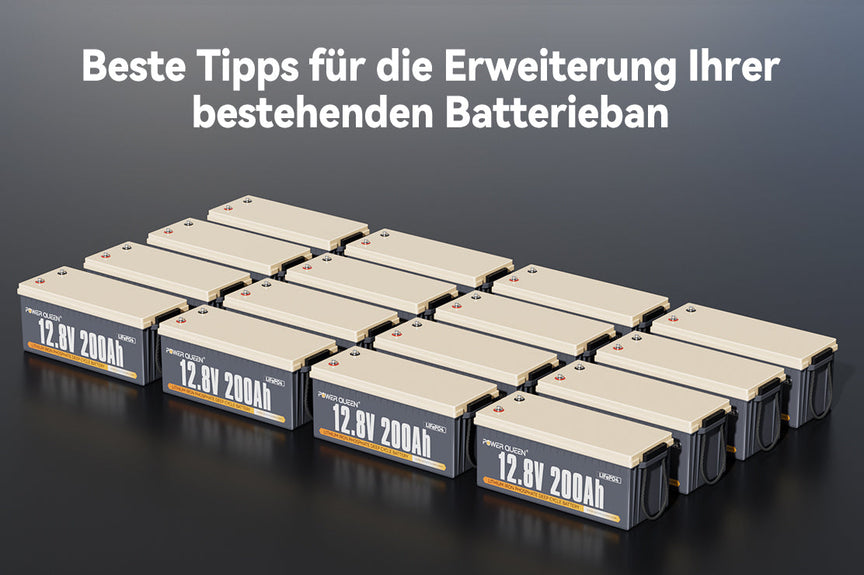
For engines with a thrust of 55 to 80 pounds A battery with a capacity of 100-150 Ah is required. Power Queen 12.8V 200Ah LiFePO4 lithium battery is perfectly suited for this category.
If your engine has between 80 and 100 pounds of thrust, You should opt for a battery with a capacity of 150-200 Ah. In this case, the Power Queen 12.8V 300Ah LiFePO4 lithium battery a suitable partner.
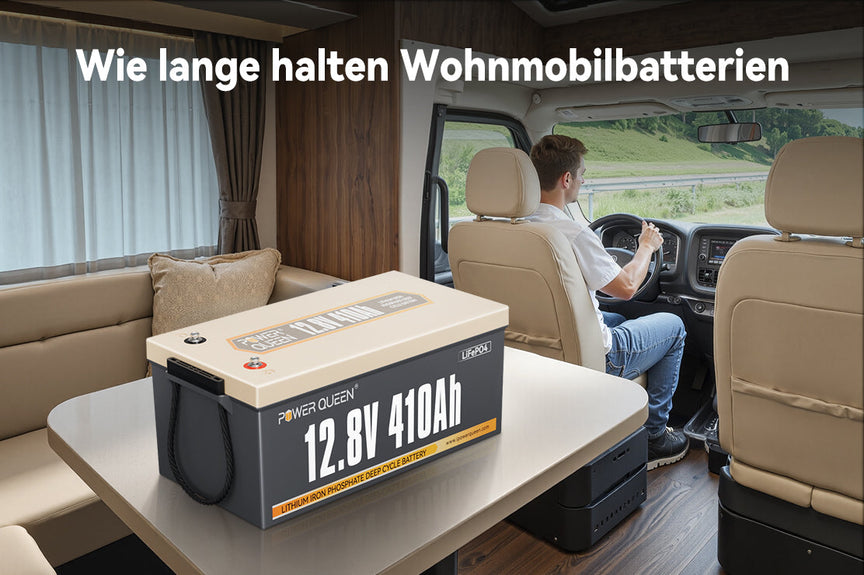
If you a larger trolling motor with a thrust of 200 to 300 pounds To own such a device, a LiFePO4 battery with a capacity of 200-300 Ah is required to ensure the necessary power and runtime. In this scenario, the Power Queen 12.8V 410Ah LiFePO4 lithium battery the best choice.
Conclusion
Lithium batteries offer an impressive list of advantages, including longer lifespan, better battery performance, and a better power-to-weight ratio than conventional batteries. This makes them an excellent option for anglers looking to optimize their trolling motor experience. Purchasing a trolling motor with a lithium battery that suits your fishing needs and preferences is easy when you know what to look for. Follow the guidelines in this article, and you'll find the right lithium battery and trolling motor without any trouble, ultimately enhancing your fishing experience.