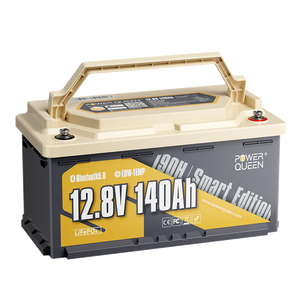
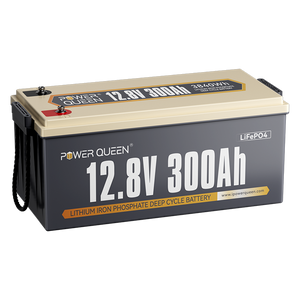
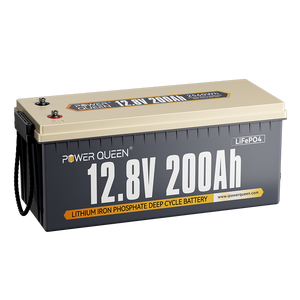
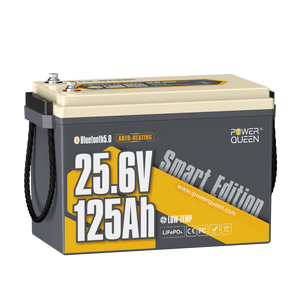




Which batteries are ideal for cold weather fishing?
We can't wait to get back out fishing in the cold, as winter is just around the corner! But it's important that you can rely on your equipment, including your power supply. Choosing the right battery is crucial for continuous operation in cold weather, whether you're using fish finders, electric outboard motors, or other devices.
In this article we will introduce you The best batteries for fishing in cold weather We will explain what is important when temperatures drop.
Table of contents
Part 1. Understanding battery performance in cold weather
Part 2. The best batteries for fishing in cold weather
2.1 LiFePO4 batteries (Lithium iron phosphate)
2.2 AGM batteries (Absorbed Glass Mat)
Part 3. Important features of a cold weather battery
Part 4. The best LiFePO4 lithium batteries for fishing
4.1 Power Queen 12V 100Ah Group 24 intelligent deep cycle lithium battery
4.2 Power Queen 12V 100Ah Low-Temperature Deep Cycle Lithium Battery
4.3 Power Queen 12V 280Ah Low Temperature Deep Cycle Lithium Battery
Part 1. Understanding battery performance in cold weather
It's important to understand how cold weather affects battery performance before considering specific battery recommendations. Batteries can lose capacity in cold temperatures because internal chemical reactions slow down. Lithium batteries are more resistant to temperature fluctuations than conventional lead-acid batteries, which can lose up to 50% of their capacity in sub-zero temperatures.
Do lithium batteries freeze? How should lithium batteries be used in winter? If you want to find out, read on.
Part 2. The best batteries for fishing in cold weather
2.1 LiFePO4 batteries (Lithium iron phosphate)
Lithium iron phosphate (LiFePO4) batteries are generally considered the best choice for fishing in cold weather. Here's why:
A. Performance in cold weather
Compared to lead-acid batteries, LiFePO4 batteries retain a greater proportion of their capacity in colder climates. LiFePO4 batteries are much more reliable for winter use, as they typically lose only 20-30% of their capacity at sub-zero temperatures, although all batteries experience some capacity loss in cold weather.
B. Fast charging
LiFePO4 batteries charge faster than lead-acid batteries, even in cold weather, so you can get back to the water sooner after a long day of fishing.
C. Long service life
You don't need to replace these batteries as often, as they last up to 10 times longer than their lead-acid competitors.
D. Lightweight
The lighter weight of LiFePO4 batteries is a great advantage for ice fishermen and anglers who use motorized kayaks or smaller boats, as it makes it easier to transport and carry more equipment.
E.Built-in BMS
One of the many high-quality LiFePO4 batteries built-in battery management system (BMS) It protects the battery from extreme cold, interrupts the charging process if the temperature drops too low, and guarantees a long service life.

Recommendation: For fishing in cold weather, Power Queen recommends low-temp LiFePO4 batteries. These batteries offer excellent reliability under difficult conditions and are suitable for outdoor use.
2.2 AGM batteries (Absorbed Glass Mat)
AGM batteries are another good choice for fishing in cold weather. They perform better than conventional flooded lead-acid batteries in cold weather, but they are not as effective as lithium batteries at very low temperatures.
Sealed and maintenance-free: Because AGM batteries are completely sealed, they require no maintenance and can be installed in any orientation, making them ideal for fishing conditions where reliability is crucial.
Moderate price point: For anglers who only rarely fish in cold weather, AGM batteries are a cost-effective choice, as they are often cheaper than LiFePO4 batteries.
Disadvantages: Their weight is their biggest disadvantage. Compared to LiFePO4 batteries, AGM batteries are significantly heavier, making them less convenient to transport, especially on small boats or kayaks.
Recommendation: If you a cost-effective option If you are looking for a battery, you should opt for AGM batteries, but be prepared for slightly lower performance in really cold temperatures.
2.3 Gel batteries
Similar to AGM batteries, gel batteries use an electrolyte that resembles a gel. At sub-zero temperatures, these batteries often perform worse than AGM or LiFePO4 batteries, even though they have a higher tolerance to cold than conventional lead-acid batteries.
No risk of leakage: Gel batteries are completely sealed and will not leak, even if damaged, just like AGM batteries.
Lower tolerance to temperatures: Although gel batteries can function even at sub-zero temperatures, they are not the best choice for extended use in high-demand devices, as they tend to slow down their discharge rate.
Recommendation: At milder, colder weather Gel batteries may be suitable for anglers, but they are not the best choice in very cold temperatures.
Part 3. Important features of a cold weather battery
When choosing a battery for fishing in cold weather, pay attention to these basic characteristics:
Cold Cranking Amps (CCA): This is a measure of how well a battery can start engines in cold weather. Higher CCA values are preferable in colder climates.
Battery Management System (BMS): A BMS, which is a standard feature of high-quality lithium batteries, protects your battery from damage caused by cold weather conditions by regulating the temperature and preventing charging below freezing.
Cycle lifespan: If you frequently fish in cold weather, you should choose a battery with a long lifespan to ensure long-term performance and durability.
Portability: Pay attention to the weight of the battery, especially if you are fishing on ice with small boats and portability is a factor.
Charging speed: Fast-charging batteries can make all the difference, especially in cold climates where time is of the essence.
Part 4. The best LiFePO4 lithium batteries for fishing
When ice fishing, batteries must be able to function in cold weather. This is a challenge that needs to be addressed, which is why batteries with cold-weather protection are crucial.
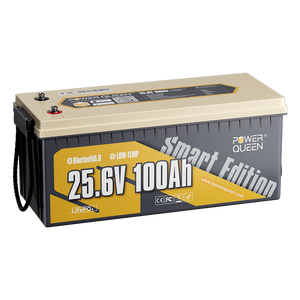
4.1 Power Queen 12V 100Ah Group 24 intelligent deep cycle lithium battery
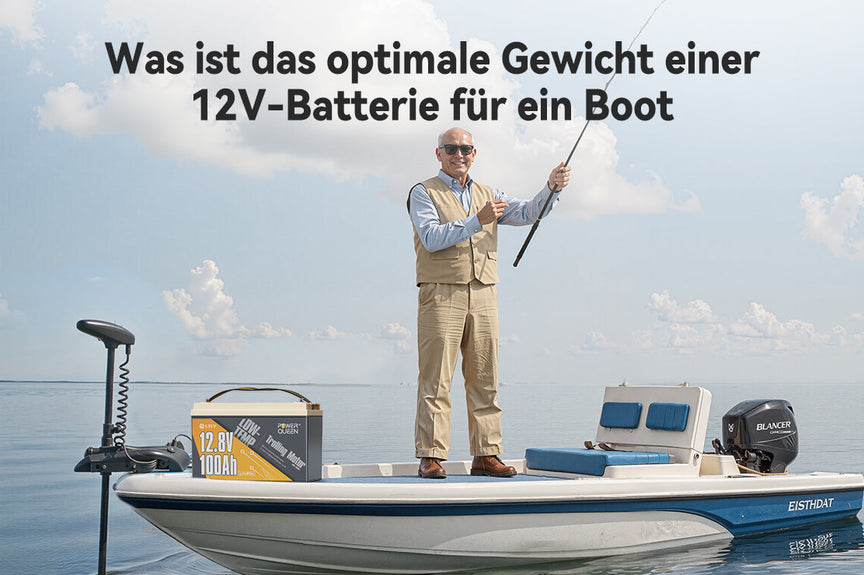
The Power Queen Group 24 Smart Deep Cycle Lithium Battery It was developed for trolling motors and will enhance your fishing experience. Protection against low temperaturesn extends the lifespan of your battery and improves charging efficiency, ensuring reliable performance and safety even in cold weather.
The battery is equipped with Bluetooth equipped to ensure a stable, interference-free connection and allow you to monitor the battery status, including SOC and voltage, in real time.
Key features include advanced EV-Grade A LiFePO4 cells for improved starting performance, a proprietary battery management system (BMS) with more than 20 protection features, and IP65 water resistance for added durability in harsh marine environments.

The batteries of Group 24 are the perfect replacement for conventional lead-acid batteries and offer a high level of safety, efficiency and long-lasting performance, making them the ultimate choice for marine applications.
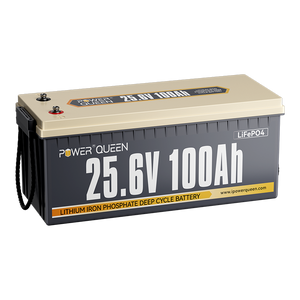
4.2 Power Queen 12V 100Ah Low-Temperature Deep Cycle Lithium Battery
If the temperature drops below 32°F (-4°F: discharge cutoff), the improved BMS of Power Queen for deep-cycle lithium batteries The battery starts charging immediately at low temperatures thanks to a low-temperature sensor. The BMS automatically restarts charging when the temperature reaches 41°F. Designed to withstand harsh marine environments, this low-temperature battery is ideal for trolling motors, marine activities, and rough freshwater environments. It is also suitable for humid and salt spray conditions. The battery's construction provides excellent weather protection and is resistant to moisture, dust, and salt spray.

4.3 Power Queen 12V 280Ah Low Temperature Deep Cycle Lithium Battery
The Power Queen 12V 280Ah Low Temperature Deep Cycle Lithium Battery Its exceptional performance in cold weather guarantees worry-free charging and use of your device.
Ice fishing is not only an enjoyable sport, but it also promotes mental and physical resilience. A battery that performs well even in cold weather is essential if you want to fully experience the thrill and excitement of this sport. Your trolling motor is powered by the Power Queen 12V 280Ah low-temperature, deep-cycle lithium battery, providing sustained power and ensuring peak performance even in challenging conditions.

Knowing you have a reliable power supply for your winter fishing trips allows you to focus on your outdoor experiences with Power Queen batteries.
Part 5.Conclusion
For anglers who take cold-weather fishing seriously, buying the right battery is crucial. Due to their long lifespan, lightweight construction, and exceptional cold-weather performance, LiFePO4 batteries - like those from Power Queen - by far the best choice. AGM and gel batteries are also good replacements, but have certain disadvantages in terms of performance and weight.
You can select the ideal battery for the efficient operation of your equipment regardless of the water temperature if you know your specific fishing requirements and the environmental factors you will encounter.