


How to expand Power Station with LiFePo4 battery
Meet our lovely customer Lukáš, a photographer from Slovakia! A passionate camper and outdoor adventurer, he often shares his travels on YouTube and Instagram, capturing the beauty of nature. In July of this year, he upgraded his power supply with a Power Queen battery, increasing the capacity of his station so he's always powered up and worry-free on his trips. Read what he has to say about his experience with Power Queen!
 I've been using a power station for years to run my electronic devices on camping trips and outdoor excursions. The capacity requirement has increased with each new device: a larger refrigerator, a larger drone, a new camera, and charging multiple iPhones for my wife and me. I've had to upgrade my power station gradually, moving from the EcoFlow River Max to the Delta 2.
These days I spend more time outdoors, sleeping off-grid not only on weekends but also during longer 5-10 day shoots with a small crew, as I'm filming a documentary series for a local TV station in addition to my hobby videos. These extended stays in the field have dramatically increased the capacity I need, since not every team member is as well-equipped as I am. This often means I have to charge everyone's cameras, laptops, lights, radios, and drones – and, of course, keep a few liters of beer cold :)
The Power Queen was a perfect fit for my project because, while the Delta 2's output is sufficient, its capacity simply isn't enough. Yes, EcoFlow offers additional batteries, but they are more than twice as expensive as the Power Queen batteries. I do charge with solar panels, but under real-world conditions like forests, marshland, or rainy autumn days, the solar output isn't as high as I need.
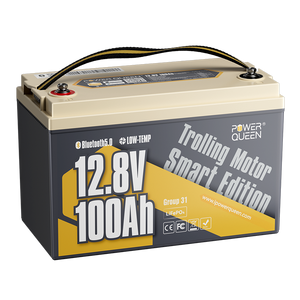
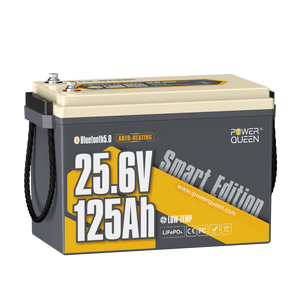
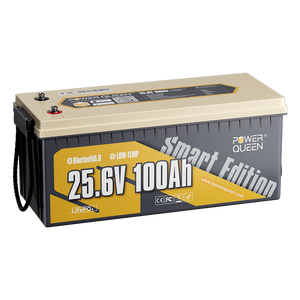
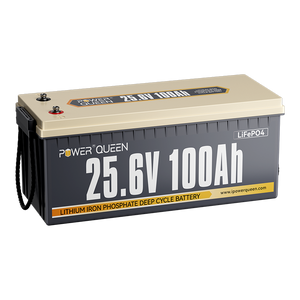
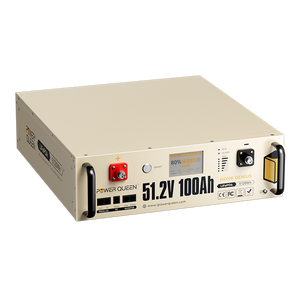
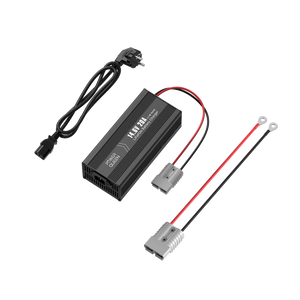
First, I had the opportunity to use the LiFePo4 12V 100Ah Smart Battery I tested the battery, which I charged using a DC-DC charger while driving, with solar power while camping, or at home via an AC charger. I connected it to the Delta 2 with an XT60i cable, which plugs directly into the Power Station's input. This way, in addition to the 1024Wh in the Delta 2, I had an extra 1280Wh of energy stored in the Power Queen battery, which I could access as needed. In a video, which you can watch here, I discuss the advantages, limitations, performance, and much more in detail:
I contacted Power Queen and explained that I wanted to upgrade from a 12V to a 24V system due to the Delta 2's 15A input limit, and they didn't hesitate to offer me a 24V battery (more precisely, a 25.6V 100Ah Smart), which perfectly meets my needs. Besides doubling the charging capacity of the Delta 2, I also have double the capacity (1280Wh compared to 2560Wh).
Since I primarily use this system to power the Delta 2, the voltage has a significant impact on the charging power. Why? Because the Delta 2's input is limited by three parameters: 15A, 60V, and 500W. When the 15A limit is reached with a 12V battery, it delivers approximately 180W (15A * 12V). Switching to a 24V battery results in approximately 360W (15A * 24V).
Can I use a 48V battery? Yes, and that would reach the 500W limit.None of the specified parameters can be exceeded, and since the Delta 2 regulates the input itself and only draws as much current as it can handle, the result with a 48V battery would be 500W as follows: 500W/51.2V ≈ ~10A
When I'm not traveling, filming, or camping, I use the battery at home to extend the capacity of my solar system with inverters. Currently, I only use EcoFlow microinverters, also in combination with the Delta 2. Just like outdoors, the Power Queen batteries act as a highly efficient storage system for the energy generated by the solar panels during the day and power the Delta 2 at night, allowing selected devices to run throughout the night.
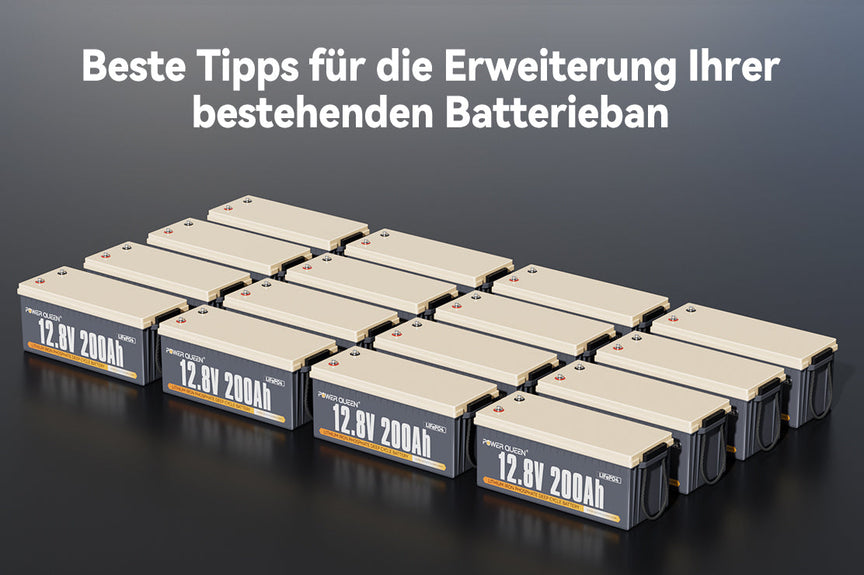
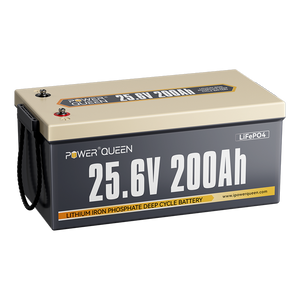
My solar system currently has a total output of 1.6 kW and a capacity of 3.6 kWh, which I plan to expand over time. The 24V battery has proven effective, and since they can be connected in series, parallel, or combination, I will purchase additional 24V batteries and continue with a 24V system configuration in parallel. If I need to upgrade to a 48V system in the future, I will simply switch the batteries to a series or series-parallel configuration to achieve 48V.
It's possible to expand the capacity of a power station with an external LiFePO4 battery on almost all models, not just EcoFlow stations. However, it's crucial to pay attention to the correct voltage and current settings and to choose the right cable. I also plan to test Power Queen batteries with other types of power stations, so if you're interested, keep an eye on the articles on the Power Queen website and my YouTube channel for updates on this topic.
Volvo Camper Life, 2024